
Lanuage:
Your Location:Home >News >Industry News
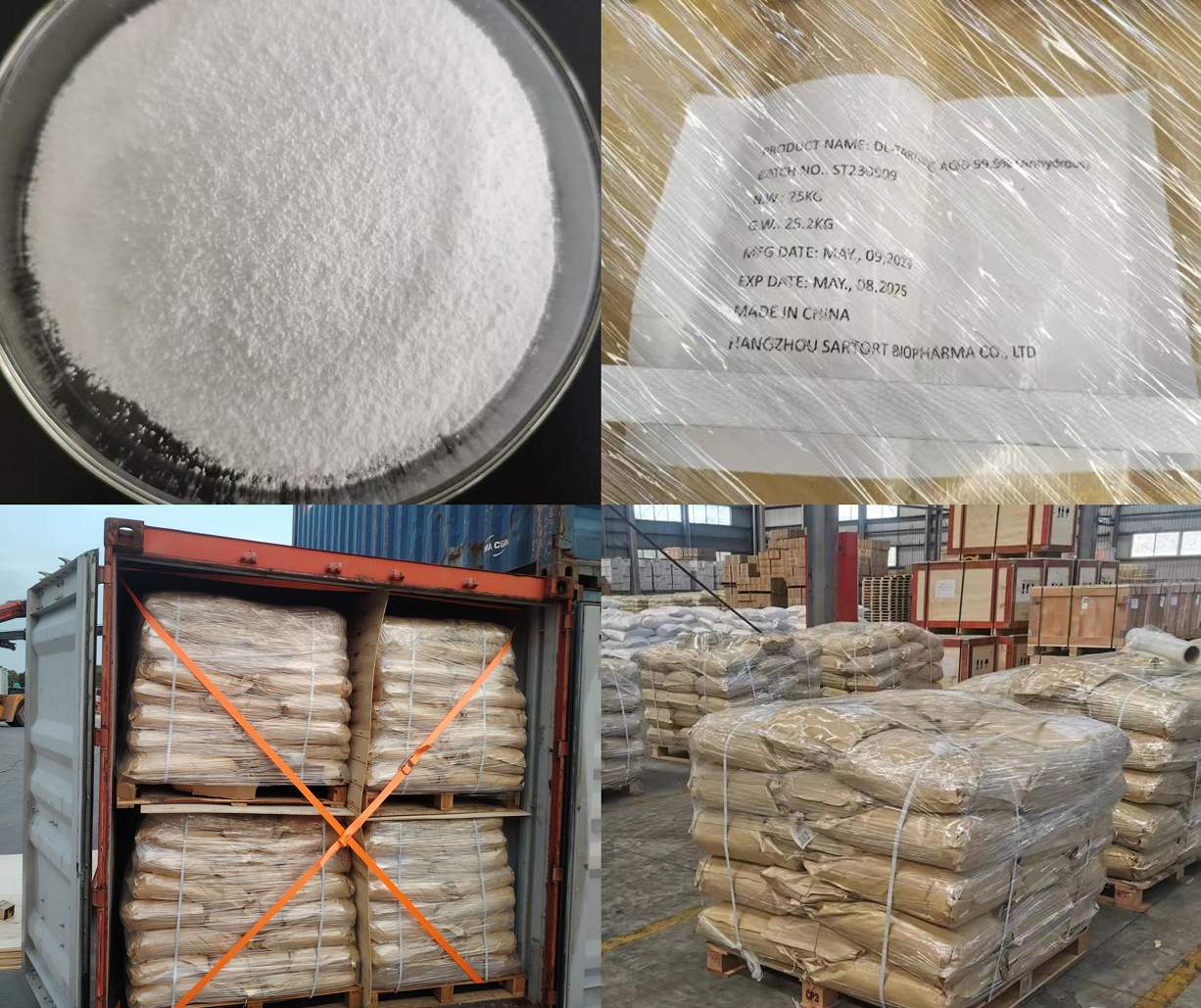
DL-Tartaric Acid (DL-Tartaric Acid), chemically named 2,3-dihydroxybutanedioic acid, is a colorless crystalline or white crystalline powder, odorless, with a sour taste, and stable in air. It is a mixture of equal amounts of D- and L-tartaric acid, often containing one or two molecules of crystallization water, which is lost when heated to 100°C.
DL-tartaric acid is highly soluble in water, slightly soluble in ether and ethanol, and its sourness is 1.2-1.3 times that of citric acid, with a unique flavor.
This product is widely used in the food, pharmaceutical, chemical, and light industry sectors. In the food industry, tartaric acid is an excellent acidulant, with a sourness 1.2-1.3 times that of citric acid and a unique flavor. According to China's food additive hygiene standards, it is mainly used in combination with citric acid, malic acid, and others and can be added to beverages, canned foods, jams, candies, etc. Due to tartaric acid's unique properties when used as a raw material in baking powder and other products, it can also serve as a chelating agent, antioxidant synergist, flavor enhancer, and fast-acting leavening agent in certain applications. In the pharmaceutical industry, tartaric acid can be used as a pharmaceutical intermediate and an efficient resolving agent. In the chemical industry, it is used in the production of tartrate salts and tartrate esters and can serve as a cleaner and polisher for metal surfaces. In the textile industry, tartaric acid combined with tannin can be used as a mordant for acid dyes. Moreover, tartaric acid has important applications in leather, cement, and photographic developing industries.


Tel:86-571-87039693 Email:sales@sartort.com